
The Scene
Picture the scene: it’s late June, Canada Day is lurking just around the corner, it’s a balmy 27°C, and by some miracle of modern scheduling, you actually have a day off. Do you responsibly tackle the laundry pile? Catch up on sleep? Clean out the fridge? Absolutely not. You jump in the car and hit the road.
Remember back during the peak lockdown days, when aimlessly driving down unfamiliar back roads because everything was closed passed for a personality trait? Then the world returned to “normal,” which mostly just meant our calendars filled back up with meetings, chores, and rigid adult commitments. Spontaneity packed its bags and left the building. Well, not this time. An open day in prime summer weather practically begged for a proper, old-school road trip—zero agenda, no strict GPS destination, just pure, glorious wandering to see what’s actually out there in our own backyard.

When was the last time you hopped in the car without a destination in mind, and what’s the weirdest roadside discovery you’ve ever stumbled across?
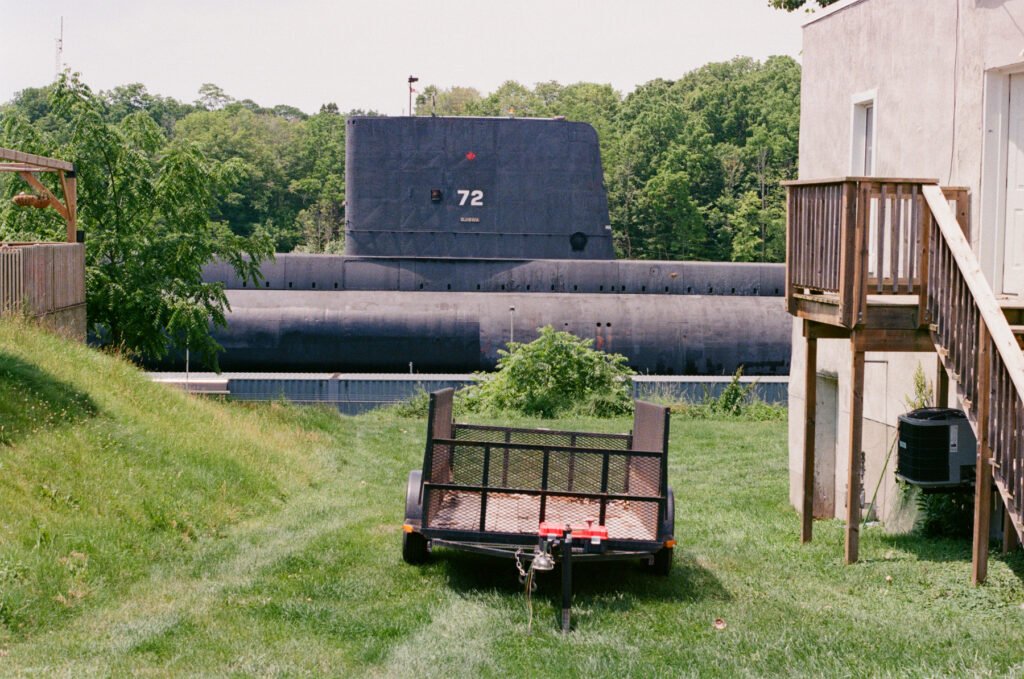
While the vibe was decidedly “go with the flow,” we did have one non-negotiable anchor in our otherwise reckless lack of planning. Years ago, we randomly stumbled across a massive naval submarine casually dry-docked in Port Burwell—because naturally, nothing screams “sleepy Ontario lakeside village” quite like 300 feet of Cold War steel parked on the grass. We arrived too late for a tour back then, but redemption was finally here. We bought tickets online, locked in a 2:00 PM slot, and built our master itinerary around it: meander leisurely along the backroads through Paris, tour the sub, cruise over to Long Point Provincial Park, and wind down in Port Dover. Four stops, zero rush, pure bliss.


First up: Paris, Ontario. Fun trivia for the cultured travelers out there: it isn’t named after the romantic European capital of croissants and bad attitudes, but rather the local gypsum deposits used to make Plaster of Paris. Inspiring, I know. Under normal circumstances, Paris is a postcard-gorgeous town perched along the Grand River, boasting a quaint, picture-perfect main street. “Under normal circumstances,” however, was doing a lot of heavy lifting.
The moment we rolled in, we were greeted not by charming boutique cafes, but by a symphony of jackhammers and a fleet of excavators violently tearing up the pavement. Turns out, the town was in the middle of re-shaping the street into a lovely, walkable, “pedestrian-friendly zone.” Wonderful news for the future of urban design; deeply tragic for anyone who didn’t bother checking municipal roadwork notices before planning a scenic detour.
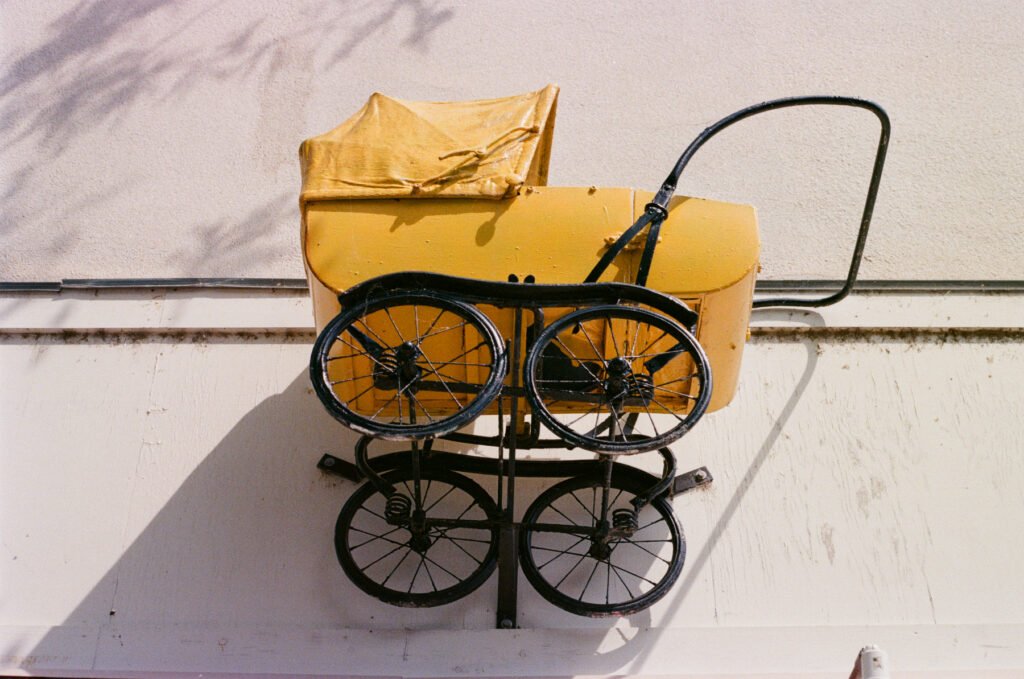
Good on you, Paris, for leveling up. Shame on me for assuming a road would actually be there. We cut our losses through the construction dust and, after a short meander, pointed the hood straight toward Port Burwell to inspect this illusive submarine..


Next up on the docket was Long Point, just a delightfully lazy cruise through the countryside away. Pro-tip for the uninitiated: visit on a random weekday unless your idea of relaxing recreation includes idling in bumper-to-bumper traffic while watching entire families battle to the death over the last square foot of sand.
Because let’s face it—stick a world-class sand spit out into Lake Erie, toss in marinas, cottages, prime beaches, and a provincial park packed with campgrounds, and you’ve essentially built a giant human bug-zapper for summer tourists. On a holiday weekend, the peninsula turns into glorious, sunburnt gridlock. On a quiet weekday, though? Total bliss.
Since our afternoon clock was ticking and we still had places to be, we didn’t linger long enough to pitch a tent or wage psychological warfare for beach parking. We treated it as a scouting mission, promising ourselves a proper, deep-dive visit down the road, and pointed the car toward Port Dover for the next chapter.
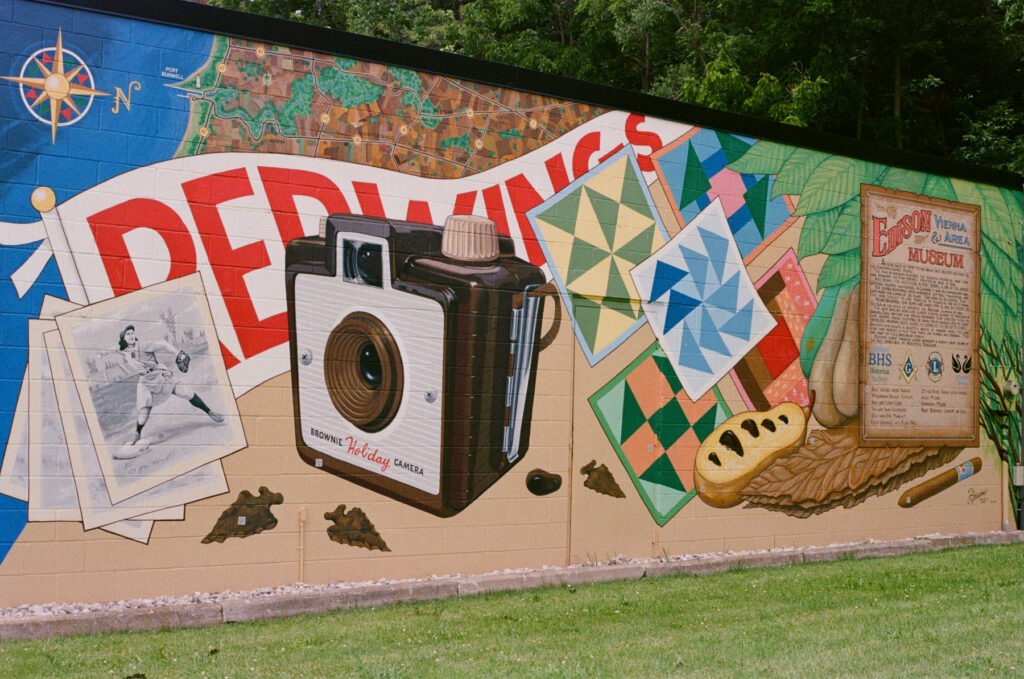
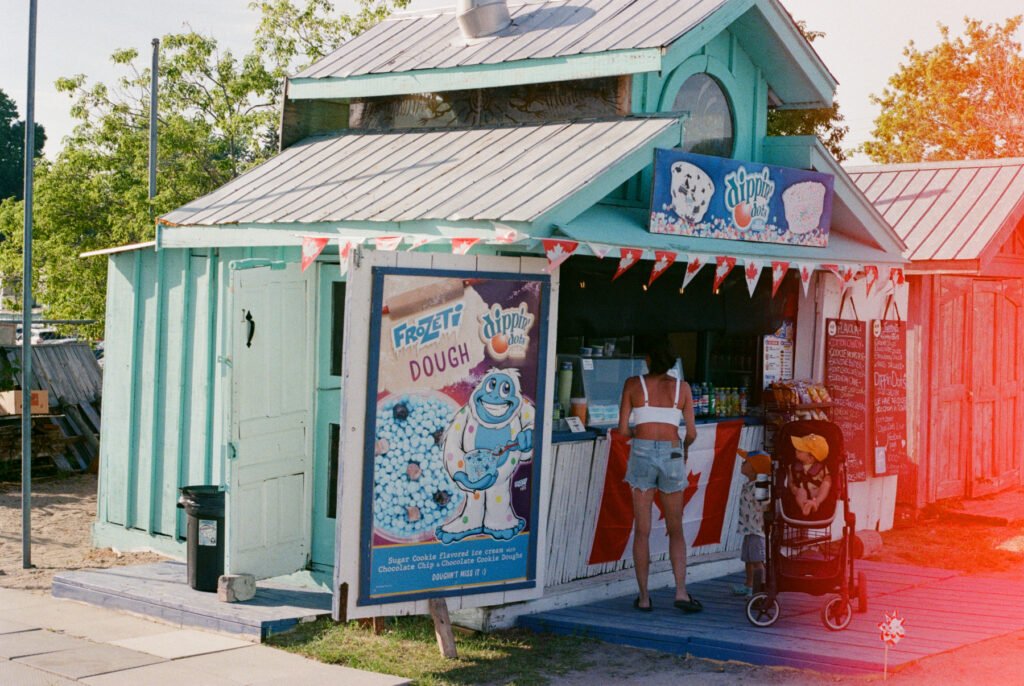
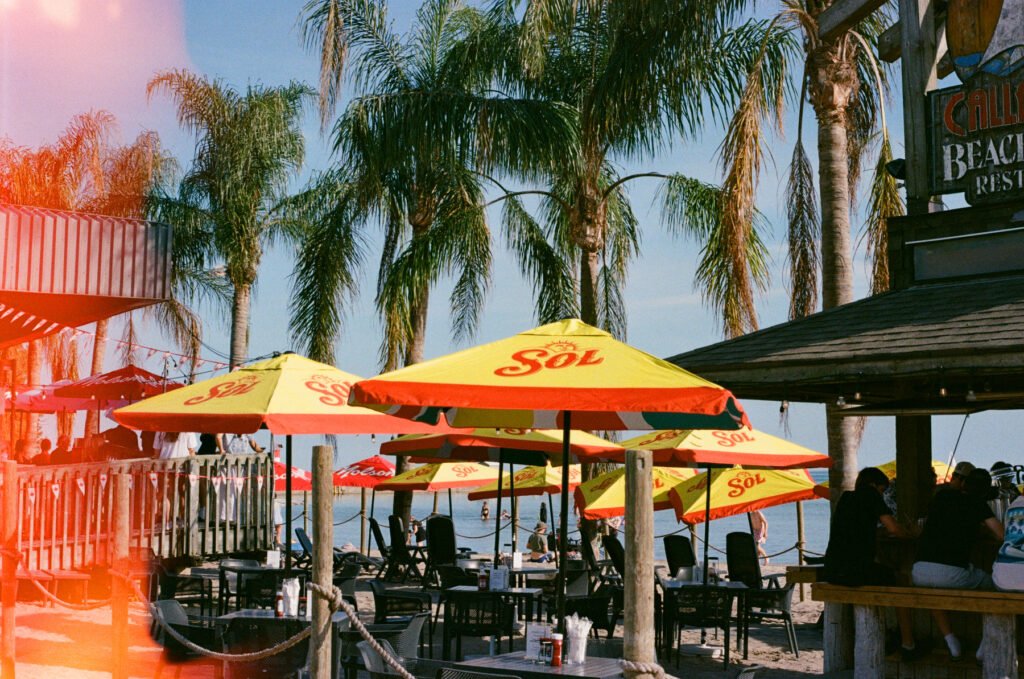
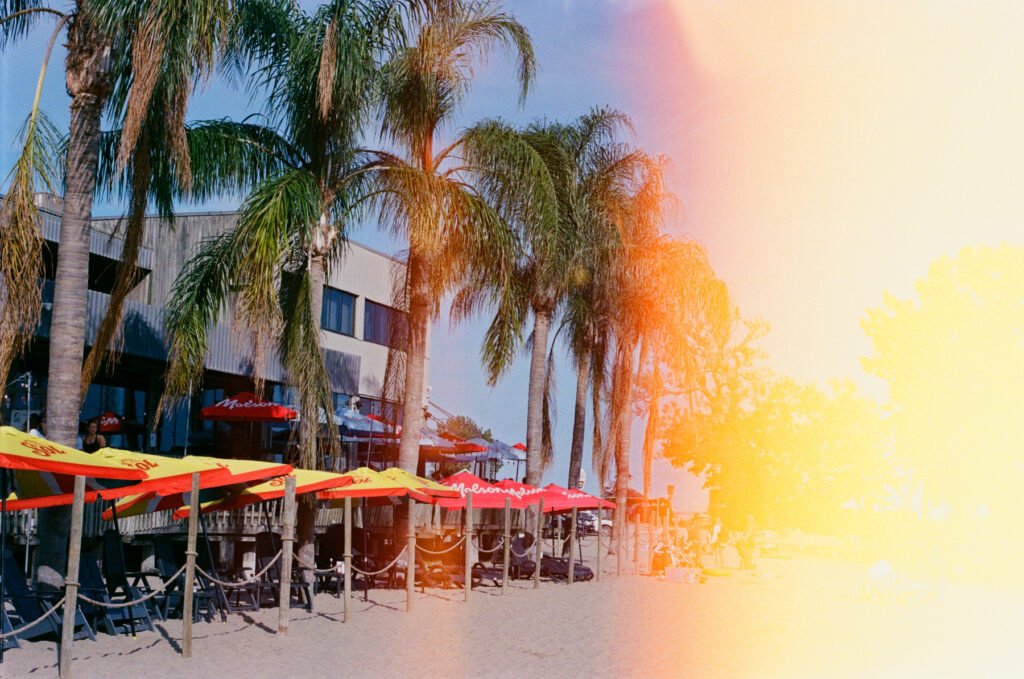
Port Dover was not playing subtle. It leaned so hard into full-throttle beach-town energy that you almost forgot you were looking at Lake Erie and not the Gulf Coast. The main strip was firing on all cylinders: packed patios, buzzing bars, kitschy gift shops, and enough ice cream parlors to trigger a Norfolk County-wide sugar rush. But the real flex? Actual, living palm trees planted right in the sand. If you squint past the absence of saltwater and ignore the occasional Great Lakes freighter crawling along the horizon, you could easily trick your brain into thinking you took a wrong turn and ended up in Daytona Beach or Southern California.
Miraculously, while the town was alive and kicking, it never crossed the line into absolute chaos. We celebrated this logistical victory the only reasonable way: by ordering an undisputed mother of all ice creams and devouring it before the 27°C heat could turn it into a sticky hand bath—a truly majestic finale to an impromptu day on the road.
A quick disclaimer on the photos: yes, those fiery orange streaks cutting across the frames are genuine light leaks. Did I prematurely crack open the camera back like an overexcited amateur who forgot how analog film works? Absolutely. But let’s just pretend I paid extra for that bespoke, vintage hipster aesthetic.
The Camera
The weapon of choice for this expedition? An office copier. Sorry, a “fake” Yashica: the Kyocera Yashica 230AF. This gloriously ugly slab of late-eighties plastic came into my possession years ago and has been collecting dust ever since. Having only taken it out for a spin once—and completely forgetting whether it was brilliant or an ergonomic crime against humanity—I did what any responsible photographer would do: shoved in a fresh battery, loaded a roll of Kodak, gave it a two-second visual inspection, and tossed it straight into the bag.
Released in 1987, just after ceramics-and-copier giant Kyocera swallowed up Yashica and Contax (and roughly 18 years before they pulled the plug on film cameras altogether), the 230AF is nobody’s dream vintage SLR. It is aggressively gray, unapologetically bulky, and sports a bizarre clip-on flash unit that makes the entire rig look like a mechanical rhinoceros. It isn’t sleek, it certainly isn’t fast, and the button layout feels like it was designed by committee via fax machine. And yet… it works. Mostly.
Somewhere along the backroads, I realized the power slider and the LCD display were locked in a bitter domestic dispute. Sliding it to “ON” might turn it on, or it might turn it off; sliding it to “OFF” produced equally indifferent results. It quickly devolved into functional existentialism: I pressed the shutter and heard a mechanical clunk, so I guess it’s awake. Honestly, that total absence of predictability suited our road trip just fine. No expectations, no pressure—if a frame turned out good, a miracle occurred; if not, oh well.
Ergonomically, it’s a trip. You have to navigate micro-sized buttons and weird little sliders—like the right-hand toggle that scrolls through aperture settings depending on your program mode. It’s not quite broken, just deeply weird. The shutter release is also ridiculously trigger-happy, which turns trying to half-press for the glacial autofocus into a high-stakes game of Russian roulette.
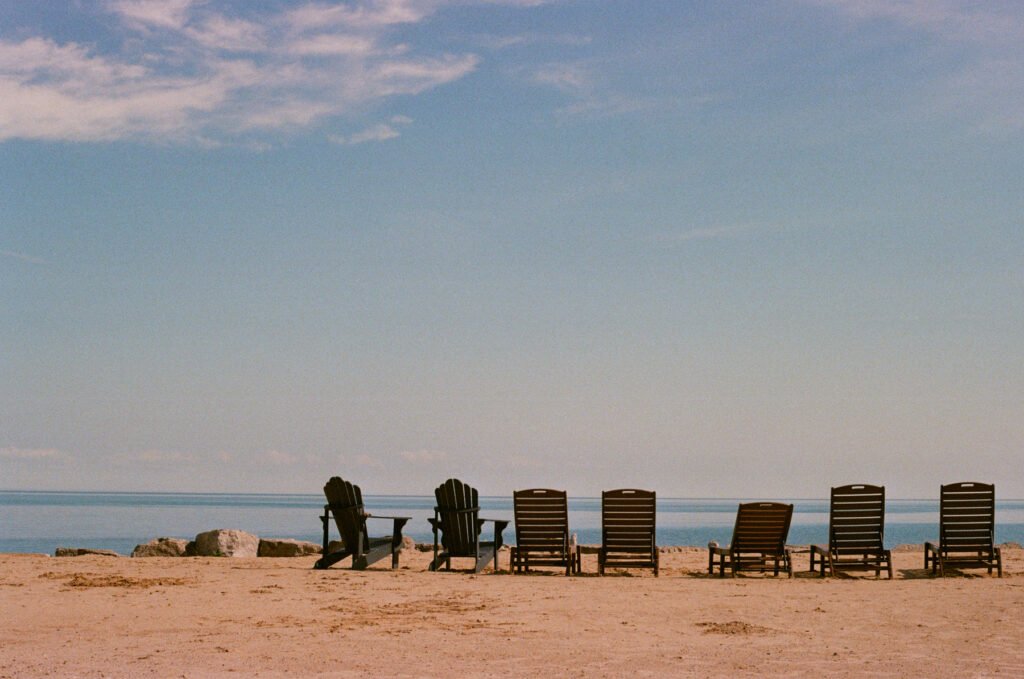
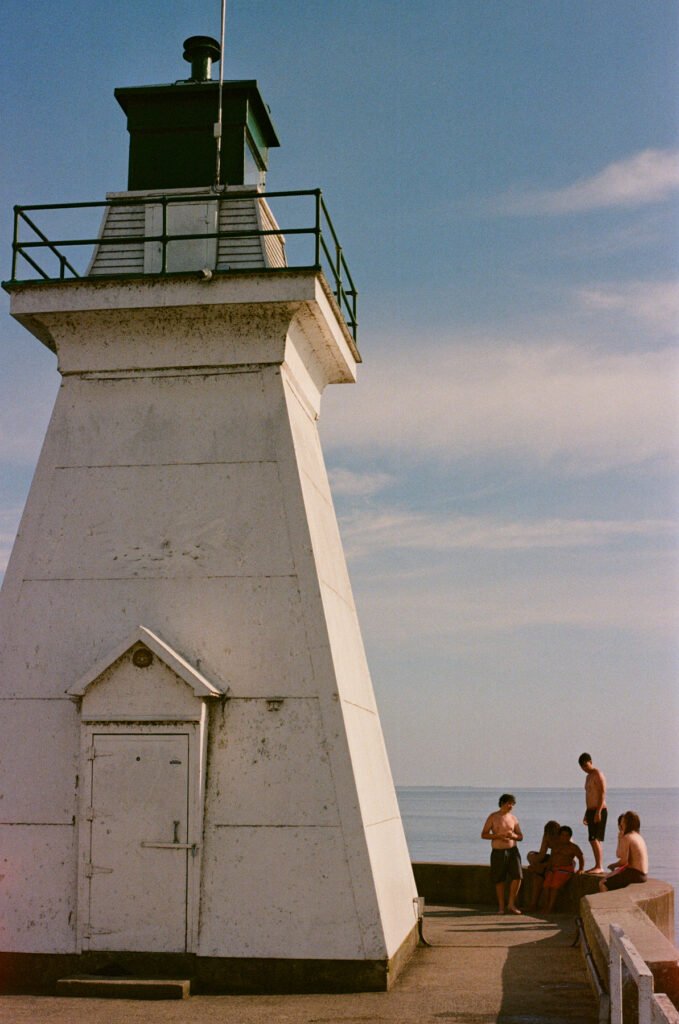
The punchline? The 50mm f/1.8 prime lens on this gray brick is surprisingly, shockingly sharp. For a dirt-cheap thrift find from the twilight era of analog, it definitely gets the job done—assuming, of course, the camera can figure out whether it’s currently alive or dead.
The Film
As for the film situation, I was playing a casual game of analog roulette. Rattling around in my gear were two naked, boxless rolls of Kodak UltraMax 400. With no packaging to consult, the expiration date was anyone’s guess—definitely past its prime, but surely by only a few years, right? Famous last words.
Thankfully, the sun was blazing with zero mercy, so I leaned into standard photographer optimism. To keep the decaying chemical emulsion from staging a total revolt, I simply overexposed by a stop—essentially force-feeding the film extra photons in the hopes of coaxing out usable shadows. The bar wasn’t set particularly high: as long as the frames came back looking like recognizable shapes rather than abstract nuclear radiation burns, I’d call it a win.
The Verdict
All in all, the road trip was a triumph. The weather was unadulterated summer perfection. The monster ice cream at the end was borderline spiritual. The camera, however? Yeah… no. Back to the dark recesses of the closet it goes.
It’s an honest shame, because that 50mm lens truly punches well above its weight class and churns out surprisingly sharp frames. But trying to photograph anything while actively negotiating terms of surrender with its moody, unpredictable on/off switch took years off my life. And let’s be real: sending a thrift-store Kyocera brick in for a professional CLA service would cost roughly ten times what the camera is actually worth. We’re talking about 1980s budget consumer electronics here—stuff that was barely holding it together during the Reagan administration, let alone nearly forty years later.
So, will there be a next road trip? You bet. In fact, the next escape is already locked in for just a few weeks from now—hopefully with gear that actually knows when it’s powered on. Stay tuned!


Leave a Reply