
* Disclaimer: the following article is more rant than reason. I offer my apologies to the hard-core Mirai aficionados out there for any unpleasant language used, but I stand by my opinion.
The Scene
On a beautiful and sunny Saturday morning, my friend Big V and I set out to slay some film, starting in Whitby Harbour. The plan for the day was to hop past a handful of sights and sounds in the Durham Region, but we ended up just barely able to make two stops as some of the places on our itinerary were not easily reachable or no longer there. As in ‘flattened’ for what I’m sure will be new development purposes.
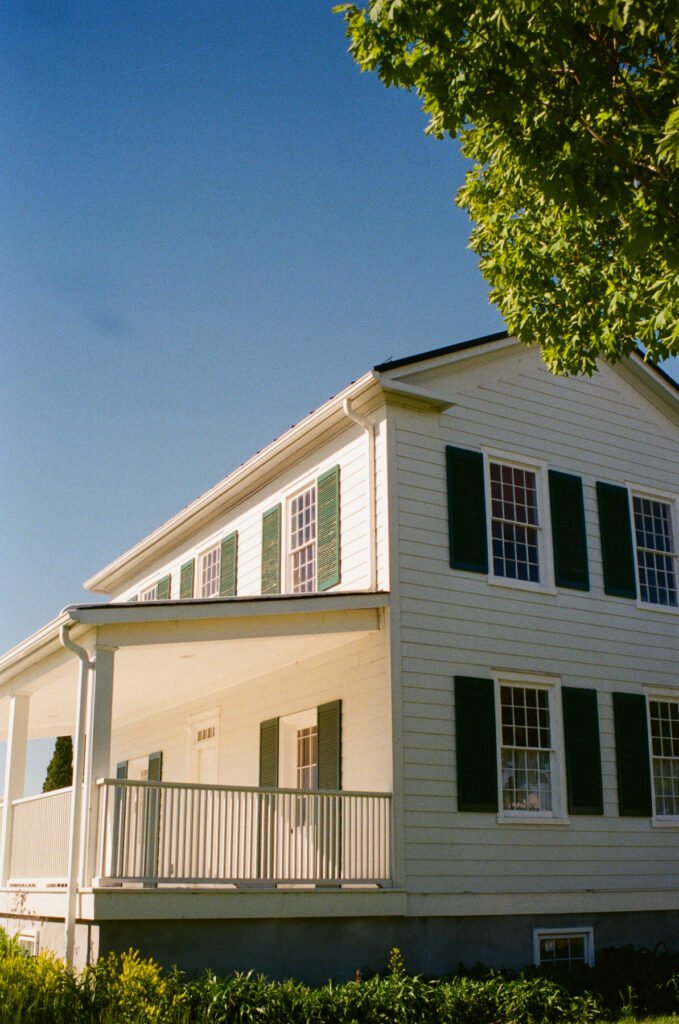
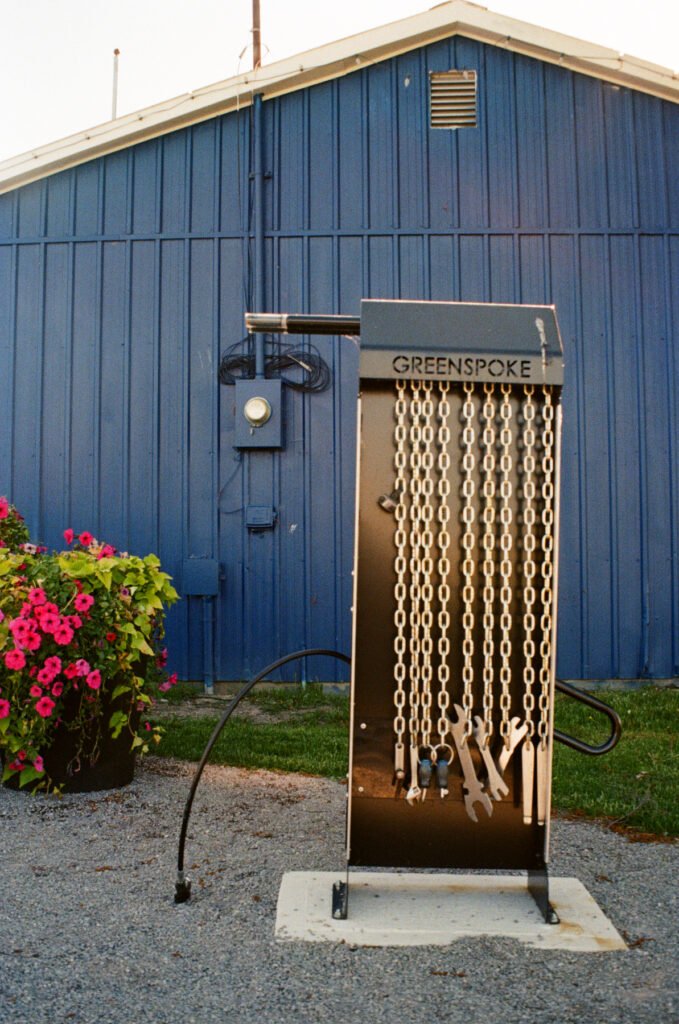
Whitby is a city east of Toronto, between Ajax and Oshawa, along Highway 401. That enormous -busiest highway in North America- vein that connects Toronto to Ottawa & Montreal to the east as well as London & Detroit to the west. As many other cities in Canada it has a borrowed name, in this case from the seaport town of Whitby in Yorkshire, England – who in turn borrowed it from Danes when they invaded Britain in the 1st century AD. The name means “White Village”, a possible allusion to the white lighthouse on the pier at Whitby, Yorkshire, and also at Whitby, Ontario. The settlement of what now constitutes Whitby dates back to 1800, and it’s currently mostly a commuter hub.
Secret fact: Whitby was home to “Camp X” during WW2, which was a secret spy training facility. Although the buildings have since been demolished, a monument was unveiled on the site of Camp X in 1984 and certain artifacts can still be found on display in local museums.

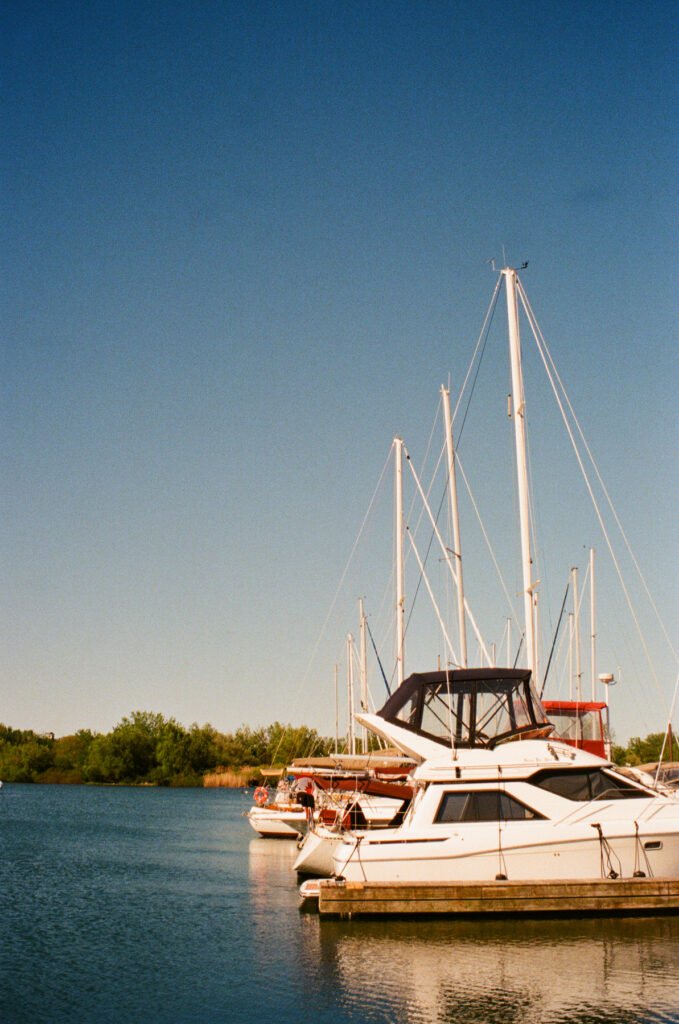
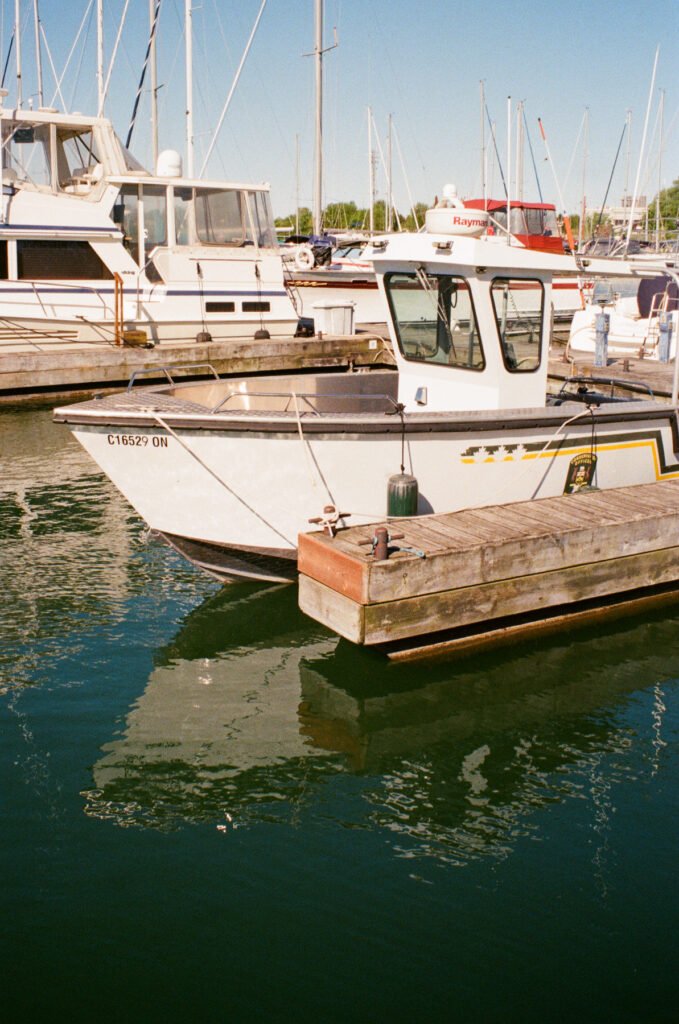
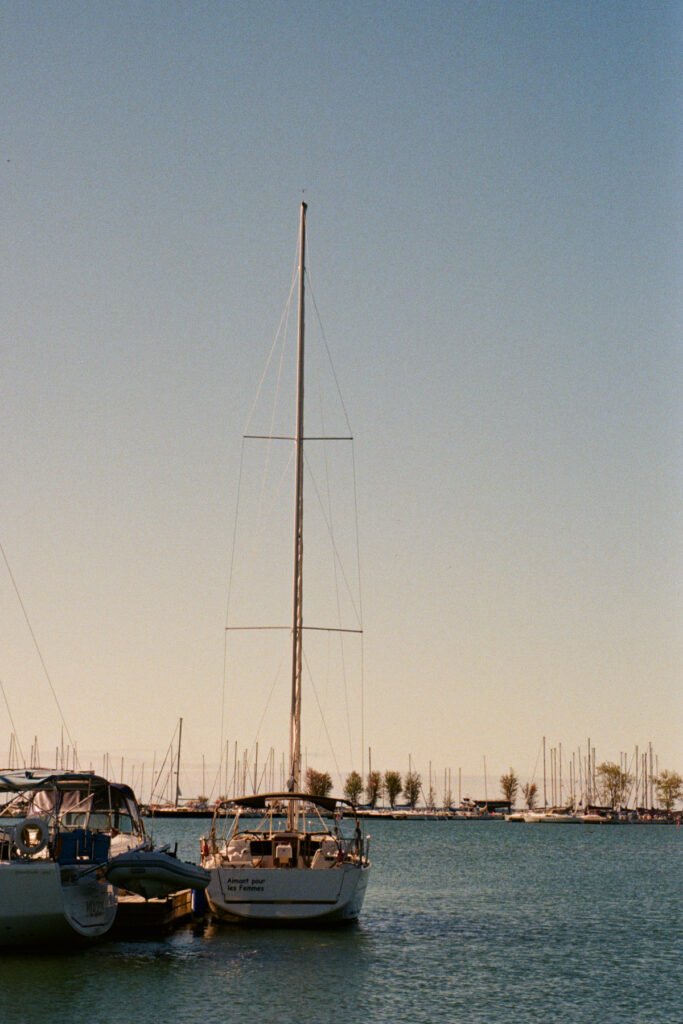
Our first stop was at the Harbour, downtown Whitby. There wasn’t much happening except for boats waiting for their owners to let out onto the lake after their winter sleep, so I took this opportunity to test an heirloom: my father’s Ricoh Mirai 105. The second ‘stop’ will be covered in a future article.
The Camera
More camcorder than film camera in appearance, this little black box has always made me wonder if it were any good. If it were my father’s budget Leica being handed down to me. But it wasn’t (any good), and it isn’t (a Leica). But that doesn’t really matter, does it? It’s now my camera and I shall use it. And so I used it, unfortunately.
Released in 1988 as a joint project between Ricoh and Olympus, this is one weird machine. It gives you the hope that it’s impressive zoom range (38-107mm) would neatly unfold in-house, but it doesn’t. Once zoomed out, there’s a weird little pipe sticking out of the front. Voilà, zoom, and SLOW zoom at that. The camera is slow in every respect, from operation down to the glass (a mighty f/4.5-6!). Unresponsive buttons, unpressable buttons (the function buttons on the back to operate flash and exposure value with are meant for toothpicks, not fingers), and an autofocus system that’s constantly looking for Orion’s Belt but can only lock onto Omega Centauri, which is not even in this hemisphere. And then there’s that distortion when zooming in…what’s up with that?! Perhaps the camera is just showing its age, but I say “no, Ricoh, this just won’t do”.
Using it for no more than 30–45 minutes, my hands and fingers grew achy from its tiresome operation, constantly pressing (zoom-)buttons and waiting for something, anything, to come to life. Not to speak of the viewfinder, which was more like looking down the barrel of a gun. Only when perfectly aligned, with one’s nose basically breaking through the film cover at the back, I was able to survey a scene. Sort of. I clearly remember my dad taking this camera on holidays throughout Europe, but now I am positive he’s had some choice words at the ready for this thing while operating it. I was not expecting this from this Ricoh camera, which generally received somewhat positive results by the looks of it, and I shall not experience this again as this brick goes straight to a shelf as a curiosity to quickly forget.
The Film
I had loaded the RicOhNo! with some bog-standard 400ISO Kodak Ultramax, just in case the lens needed some help. This film is just fine with a pleasing -and in my opinion, summery- punchy tonal range. It does a good job for snapshots and its use can be stretched much further if you don’t shoot it at box speeds.
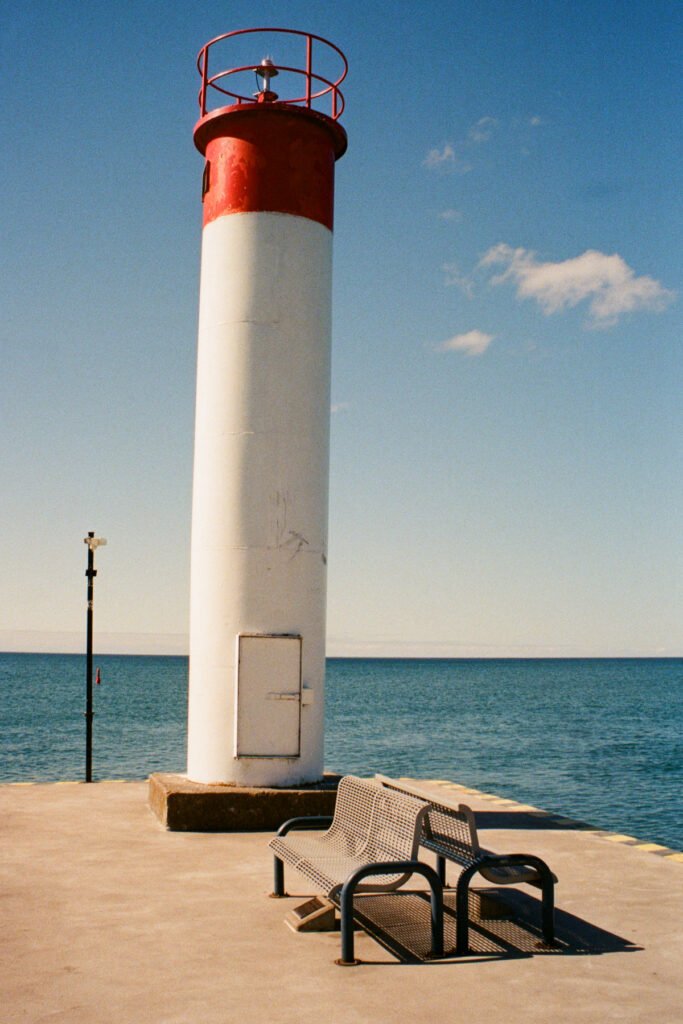
I do like the reds and warmth this film produces, though I’d prefer if it had a bit more dynamic range. Some images feel a little ‘flat’ to me, and some others look like they didn’t come from the same roll. But I’m nitpicking as Ultramax is a consumer film and one of Kodak’s most “ultra affordable” (available from $6 in the 2000s to $18 in 2026) ones at that, so what should one expect, hm?
The Verdict
I think I can be quite brief with this part. Would I go back to Whitby? Sure, why not. We skipped the actual town and driving through it did looked interesting. Nice shops, some cool looking local restaurants, pubs and other establishments…I could explore some more here. But would I use this camera again? Nein. Nie. Nope. Non. Or as I’m sure my father would have exclaimed: “Ja dat gaat ’em dus effe helemaal niet worden, ja? Wat een takkeding!”.

Leave a Reply